Evaluating the 3D Easter Confetti Shaker Bundle for Interactive Paper Crafts
The landscape of seasonal paper crafting has evolved significantly from flat die-cuts and standard greeting cards. Crafters are increasingly seeking dimensionality and interactivity, driving demand for projects that engage the senses beyond just visual appeal. A 3D Easter Confetti Shaker Bundle represents a specific category within this trend, offering pre-designed templates that allow makers to create moving, layered elements filled with loose materials. Unlike static decorations, these shakers introduce kinetic energy to Easter-themed projects, whether they serve as cake toppers, cupcake decorations, children's toys, or standalone gifts. Understanding the mechanics, material requirements, and practical applications of such a bundle is essential for determining if it aligns with your current project goals and skill level.
Defining the Mechanics of 3D Shaker Designs
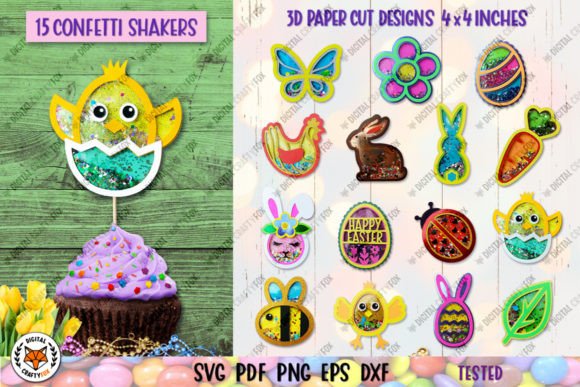
At its core, a 3D shaker design relies on the creation of a sealed cavity between two layers of material. This cavity is partially filled with loose elements—typically confetti, beads, or sequins—that move freely when the object is shaken. What distinguishes a high-quality 3D Easter Confetti Shaker Bundle from generic cut files is the precision of the layering system. Effective designs include numbered layers that dictate the exact order of assembly, ensuring that the structural integrity of the "window" is maintained without leaking contents.
The architecture of these files usually involves a base layer, a middle spacer layer (or rim), and a top decorative layer. The spacer is critical; it provides the necessary depth for the confetti to tumble. In the context of Easter bundles, these spacers are often designed with specific attention to thematic shapes like eggs, bunnies, or chicks. The inclusion of specialized strips with teeth or serrated edges in some file sets is a notable feature. These strips are engineered to create a high, secure rim that holds the confetti effectively while providing a larger surface area for adhesion, reducing the risk of the shaker bursting open during handling.
Material Selection and Structural Considerations
One of the primary decision points when utilizing a 3D Easter Confetti Shaker Bundle is the choice of materials for the spacer layer. The success of the final product depends heavily on this selection. Common options include thick cardboard, felt, foam sheets (often referred to as foamin), or the accumulation of multiple layers using double-sided tape.
- Thick Cardboard: Offers excellent rigidity and is ideal for structural items like gift tags or ornaments that need to hold their shape without bending. However, it can be difficult to cut intricate details depending on the blade sharpness and machine settings.
- Felt: Provides a soft, tactile finish that is particularly suitable for children's toys or baby shower favors. It absorbs adhesive well but may require specific glue types to prevent seepage.
- Foam Sheets: Perhaps the most popular choice for shakers due to their inherent thickness and compressibility. They create a consistent gap for the confetti and are generally easy for cutting machines to process.
- Double-Sided Tape: Using multiple layers of tape is a viable alternative for those without foam or felt, though it can be time-consuming to apply evenly around complex curves.
For the transparent window that allows the confetti to be seen, clarity and durability are paramount. While acetate sheets are the industry standard, creative alternatives exist. Thin silicone material covers harvested from old notebooks or plastic folders can serve as effective, cost-efficient substitutes. These materials offer sufficient transparency and flexibility, though crafters must test their adhesion properties with their chosen glue to ensure a permanent seal.
Digital File Formats and Compatibility
When evaluating digital resources, file compatibility is a major factor. A comprehensive 3D Easter Confetti Shaker Bundle typically includes a variety of formats to accommodate different workflows and software ecosystems. The presence of SVG and DXF files is standard for users of electronic cutting machines like the Cricut Explore Air 2 or Silhouette Cameo. These vector formats ensure that cuts are crisp and scalable without loss of quality.
However, the utility of a bundle extends beyond machine cutting. The inclusion of EPS10 files caters to professional graphic designers using Adobe Illustrator, allowing for further customization of the vector paths. For those who prefer hand-cutting or do not own a plotter, PNG files at high resolution (300 DPI) with transparent backgrounds are invaluable. These can be printed and used as stencils or traced manually. Additionally, PDF files containing all layers provide a universal reference that can be viewed on any device, serving as a reliable backup or instruction guide.
It is worth noting that tested files, such as those verified on a Cricut Explore Air 2, offer a layer of confidence regarding cut settings and weeding difficulty. Knowing that a design has been physically prototyped reduces the trial-and-error phase for the end-user, saving both time and material costs.
Comparative Analysis: Shakers vs. Traditional Decor
How does a shaker project compare to traditional flat paper crafts? The primary trade-off lies in the complexity of assembly versus the engagement level of the final product. Flat die-cuts and printed cards are faster to produce and require fewer materials. They are ideal for high-volume projects, such as classroom party favors or mass-mailing invitations.
In contrast, a 3D Easter Confetti Shaker Bundle demands more time and precision. The process involves gluing multiple layers, filling the cavity, and sealing the unit securely. There is a higher margin for error; if the seal fails, the confetti spills, ruining the aesthetic. However, the return on this investment is a significantly higher "wow" factor. The movement of the confetti captures attention in a way static images cannot. For applications like cake toppers or centerpiece decorations where the item will be viewed closely and interacted with, the dimensional aspect justifies the extra effort.
Furthermore, shakers offer a unique sensory experience for children. As a toy or fidget element, the sound and motion of the shifting confetti can be soothing and engaging. This makes the shaker format superior to flat cutouts for gifts intended for younger demographics, provided that the construction is robust enough to prevent choking hazards from loose parts.
Practical Applications and Use Cases
The versatility of these designs allows them to transcend simple card making. When considering the 3D Easter Confetti Shaker Bundle for specific projects, several use cases stand out:
- Cake and Cupcake Toppers: When adapted with food-safe considerations (ensuring no loose parts can fall into the food), these shakers make vibrant decorations. The 4x4 inch artboard size mentioned in many bundles is often scalable or can be reduced to fit standard baking needs. The height provided by the foam or cardboard layers adds a professional, bakery-style look.
- Interactive Greeting Cards: Incorporating a shaker element into the front of a card transforms a standard message into an experience. The recipient interacts with the card before even opening it.
- Ornaments and Gift Tags: The durability of a well-constructed shaker makes it suitable for hanging on Easter trees or attaching to gift baskets. The movement adds a festive dynamic to home decor.
- Educational Tools: For teachers or parents, these can be used as counting tools or sensory aids for children, combining craft time with learning opportunities.
Limitations and Decision Factors
Despite their appeal, 3D shaker bundles are not the optimal solution for every scenario. Crafters working under tight deadlines may find the multi-step assembly process prohibitive. Additionally, shipping shaker cards can be challenging; the added bulk and fragility require sturdy envelopes and extra postage, which may negate the cost savings of digital downloads.
Another consideration is the skill floor. While the files may come with instructions and numbered layers, achieving a clean finish requires patience. Glue management is critical; too much glue can obscure the window or jam the confetti, while too little compromises the seal. Beginners should be prepared for a learning curve, potentially wasting a few sets of materials before mastering the technique.
Moreover, the reliance on specific materials like foam or acetate means that crafters must source these items separately. The digital download provides the design, not the physical components. Those looking for an all-in-one kit including physical supplies may need to look elsewhere, as most bundles are strictly digital files for personal fabrication.
Making an Informed Choice
Ultimately, deciding whether to utilize a 3D Easter Confetti Shaker Bundle comes down to the desired outcome of the project. If the goal is to create a memorable, interactive piece that stands out through motion and depth, these files offer a robust foundation. The availability of multiple file formats ensures accessibility for both machine owners and hand-cutters, while the inclusion of instructional previews aids in visualizing the final result.
However, if speed, simplicity, or low-cost mailing are the primary priorities, traditional flat designs may remain the better option. By weighing the trade-offs between assembly complexity and interactive impact, crafters can determine if the shaker approach fits their specific Easter crafting strategy. For those willing to invest the time in layering and assembly, the result is a dynamic piece of art that brings the spirit of the holiday to life in a tangible, moving way.