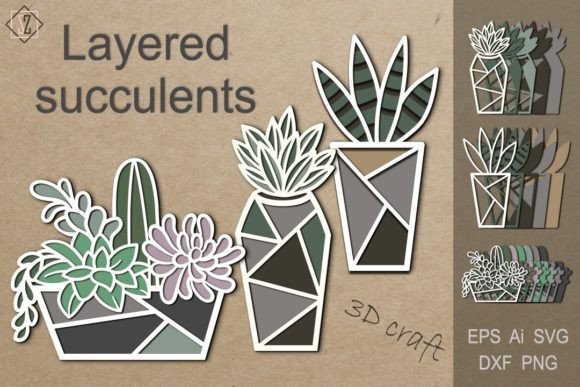
Evaluating Layered Succulents in Pots 3D Craft for Multi-Material Projects
For crafters and designers working with digital cutting machines, the transition from flat, two-dimensional silhouettes to dimensional art represents a significant shift in both technique and aesthetic outcome. Layered Succulents in Pots 3D Craft files offer a specific approach to this transition, utilizing stacked vectors to create depth, shadow, and texture that single-layer cuts cannot achieve. When evaluating whether this style fits your current project needs, it is essential to understand not just the visual appeal, but the technical requirements, material constraints, and workflow differences compared to traditional crafting methods.
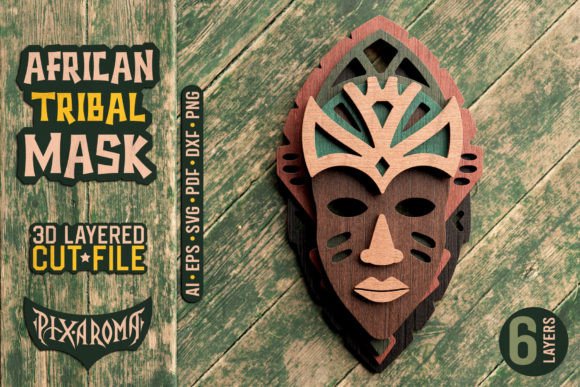
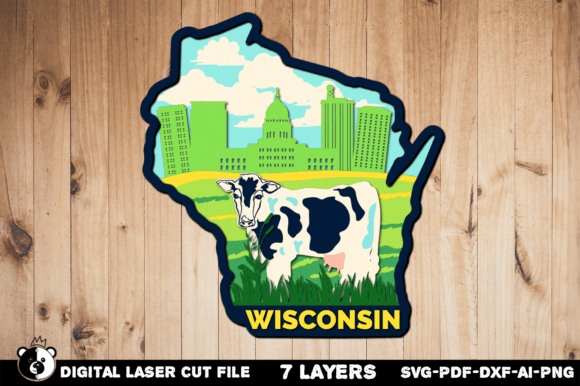
This form of digital design breaks down a complex botanical image into discrete planes. Instead of a single outline of a succulent, the design is separated into multiple layers—typically representing the pot, the soil line, the base leaves, mid-level foliage, and top details. When these layers are cut from materials of varying thicknesses or colors and assembled with adhesive spacers, the result is a tactile, shadow-box effect. This distinguishes Layered Succulents in Pots 3D Craft from standard SVGs used for vinyl decals or simple paper crafts, where the goal is often a flat, uniform application.
Technical Specifications and File Compatibility
The utility of any digital asset relies heavily on its compatibility with your existing hardware and software ecosystem. High-quality layered designs, such as those found in professional collections, typically provide a comprehensive suite of file formats to ensure broad accessibility. A robust package will include EPS10, SVG, AI, DXF, and PNG formats. Each serves a distinct purpose in the crafting workflow:
- SVG (Scalable Vector Graphics): The industry standard for web-based cutting software like Cricut Design Space and Silhouette Studio. These files maintain vector paths regardless of scaling, ensuring clean cut lines.
- DXF (Drawing Exchange Format): Often preferred for older versions of cutting software or CAD-based programs. It provides precise geometric data but may lack some styling attributes found in SVGs.
- AI and EPS10: Native Adobe Illustrator formats and universal vector standards, respectively. These are critical for users who need to edit anchor points, modify layer structures, or integrate the succulent elements into larger composite illustrations before sending them to a cutter.
- PNG (Portable Network Graphics): While not cuttable, high-resolution PNGs (300 dpi) with transparent backgrounds are invaluable for sublimation printing, digital planning, or creating mockups to visualize the final product before committing materials.
It is important to note that receiving separate folders for each layer indicates a high level of organization. This structure allows the user to isolate specific elements—for instance, using only the base layer for a stencil while ignoring the detailed top layers. However, this modularity requires the user to have the software capability to manage multiple files simultaneously and align them accurately during the assembly phase.
Material Considerations and Structural Integrity
The success of a 3D layered project is less about the digital file and more about the physical medium chosen to execute it. Unlike flat crafts where thin cardstock or adhesive vinyl suffices, Layered Succulents in Pots 3D Craft demands materials with sufficient structural rigidity to hold their shape when elevated.
When selecting materials, density is a primary factor. If the material is too flimsy, the layers may curl or collapse under their own weight, ruining the dimensional effect. Recommended substrates include:
- Heavyweight Cardstock (80lb - 110lb): Ideal for indoor decor and greeting cards. It cuts cleanly on most consumer machines and holds adhesive well.
- Balsa Wood or Thin Plywood: For a rustic or durable finish, wood layers add significant depth. However, this requires a machine capable of handling denser materials and potentially multiple passes.
- Acrylic or MDF: These provide a modern, sleek look but require specialized blades and settings. They are best suited for permanent installations rather than flexible paper crafts.
A critical trade-off exists between material thickness and machine capability. While thicker materials enhance the 3D effect, they increase the risk of incomplete cuts or blade drag. Users must evaluate their machine's torque and blade sharpness before attempting to cut dense materials. Furthermore, the use of an RGB color profile in the digital preview means that screen colors may differ from the physical material purchased. Relying solely on the digital color swatch for material selection can lead to mismatches; it is advisable to order physical samples or rely on material names rather than screen appearance.
Comparative Analysis: Layered vs. Flat and Hand-Cut Approaches
To determine if this specific digital resource is the right choice, one must compare it against alternative methods of creating succulent imagery.
Comparison with Single-Layer SVGs:
Single-layer files are faster to produce. They require one cut, one weeding session (if using vinyl), and immediate application. They are superior for high-volume production, such as making dozens of stickers or t-shirt transfers. In contrast, Layered Succulents in Pots 3D Craft multiplies the labor time by the number of layers (often 5 to 7 layers per plant). The decision here hinges on the value placed on visual depth versus production speed. If the goal is a premium, gallery-style piece, the layered approach wins. If the goal is rapid prototyping or bulk merchandise, single-layer is more efficient.
Comparison with Hand-Cutting:
Before digital files, achieving this level of precision required intricate hand-cutting with X-Acto knives. This method allowed for unlimited customization but demanded极高的 skill and time. Digital layered files democratize this aesthetic, allowing hobbyists to achieve professional-grade symmetry and detail without years of practice. However, the digital route limits creativity to the provided shapes unless the user possesses vector editing skills to modify the AI or EPS files.
Comparison with 3D Printing:
3D printing offers true volumetric creation, whereas layered crafting creates an illusion of volume through stacking. 3D printing is better for functional objects or fully rounded forms but often lacks the crisp, graphic quality of paper or wood layers. Additionally, 3D printing requires different hardware and post-processing (sanding, painting). Layered crafting remains a "cleaner" process regarding fumes and setup, making it more accessible for home craft rooms.
Decision Factors and Best-Fit Scenarios
Choosing to utilize Layered Succulents in Pots 3D Craft files should be a deliberate decision based on your project goals, available tools, and patience for assembly. These files are the optimal choice when:
- Creating Shadow Boxes: The inherent depth of the layers makes them perfect for deep-frame displays where lighting can cast natural shadows between the tiers.
- Producing High-End Greeting Cards: The tactile nature of layered paper adds a perceived value to handmade cards, distinguishing them from mass-produced options.
- Developing Mixed Media Art: Artists can combine the cut layers with painted backgrounds or fabric textures, using the digital cutouts as focal points.
- Teaching Advanced Crafting Techniques: For workshops, these files serve as excellent teaching tools for alignment, spacing, and adhesive application.
Conversely, this approach may not be suitable if you are working with tight deadlines, lack a reliable cutting machine, or are uncomfortable with fine-motor assembly tasks. The requirement to align multiple layers perfectly means that even a millimeter of error can be visible in the final product. Additionally, if your hardware cannot handle denser materials, the "3D" effect may appear flat and underwhelming.
Workflow Optimization and Assembly Tips
Once the files are downloaded and the appropriate materials selected, the assembly process dictates the final quality. To ensure the pattern cuts and holds its shape effectively, consider the following practical steps:
First, organize your digital workspace. Since the download includes separate folders for each layer, label them clearly (e.g., "Layer 1_Base," "Layer 2_Mid," etc.) before sending them to the cutter. This prevents confusion during the sorting phase. Second, pay attention to the kerf (the width of the cut). When stacking layers, the blade removes a tiny amount of material. In very tight designs, this can cause upper layers to sit slightly loosely. Some advanced users offset their cut lines by 0.1mm in their software to compensate for this, ensuring a snug fit.
Adhesive selection is another variable. Standard glue sticks may warp thin paper, while liquid glues can bleed through porous materials. Double-sided foam tape is often the preferred medium for 3D crafting as it provides both adhesion and consistent spacing between layers, enhancing the shadow effect. However, for wood or acrylic, a strong craft glue or epoxy may be necessary.
Finally, always perform a test cut on a scrap piece of your intended material. This verifies that your machine settings (pressure, speed, blade depth) are correct for that specific density. Because screen colors (RGB) vary from print, do not assume the material color matches the digital preview exactly; focus instead on the contrast between layers to ensure the depth is visible.
Conclusion
Layered Succulents in Pots 3D Craft represents a sophisticated intersection of digital precision and tactile artistry. By offering files in versatile formats like EPS10, SVG, AI, DXF, and PNG, these resources empower creators to produce work that stands out in a saturated market of flat designs. However, the investment in time and material quality is higher than traditional crafting. Success depends on matching the file's complexity with the right substrate density and having the patience for meticulous assembly. For those willing to navigate these variables, the result is a durable, visually striking piece of art that leverages the full potential of modern cutting technology.